
By using this site, you agree to the Privacy Policy and Terms of Use.
Accept
𝐁𝐞𝐬𝐭𝐫𝐚𝐭𝐞𝐝𝐡𝐞𝐚𝐥𝐭𝐡𝐁𝐞𝐬𝐭𝐫𝐚𝐭𝐞𝐝𝐡𝐞𝐚𝐥𝐭𝐡𝐁𝐞𝐬𝐭𝐫𝐚𝐭𝐞𝐝𝐡𝐞𝐚𝐥𝐭𝐡
  • Health News
  • Diet & Nutrition
  • Healthy Foods
  • Healthy Drinks
  • Find Doctors
Font ResizerAa
𝐁𝐞𝐬𝐭𝐫𝐚𝐭𝐞𝐝𝐡𝐞𝐚𝐥𝐭𝐡𝐁𝐞𝐬𝐭𝐫𝐚𝐭𝐞𝐝𝐡𝐞𝐚𝐥𝐭𝐡
Font ResizerAa
  • Health News
  • Diet & Nutrition
  • Healthy Foods
  • Healthy Drinks
  • Find Doctors
Search
  • Health News
  • Diet & Nutrition
  • Healthy Foods
  • Healthy Drinks
  • Find Doctors

Top Stories

Explore the latest updated news!
Stop Taking Magnesium for Blood Pressure Until You Read This

Stop Taking Magnesium for Blood Pressure Until You Read This

Stop Taking Omega-3s for Blood Sugar Until You Read This

Stop Taking Omega-3s for Blood Sugar Until You Read This

5 Ways To Safely Raise Low Blood Pressure

5 Ways To Safely Raise Low Blood Pressure

Stay Connected

Find us on socials
248.1k Followers Like
61.1k Followers Follow
165k Subscribers Subscribe
Made by ThemeRuby using the Foxiz theme. Powered by WordPress
𝐁𝐞𝐬𝐭𝐫𝐚𝐭𝐞𝐝𝐡𝐞𝐚𝐥𝐭𝐡 > Blog > Articles > Anal Fissures: Causes, Symptoms, and Treatment Options
Articles

Anal Fissures: Causes, Symptoms, and Treatment Options

Edward Cooper
Last updated: July 21, 2023 9:36 am
By Edward Cooper
Share
SHARE
Highlights
  • According to research conducted by the American Society of Colon and Rectal Surgeons, anal fissures affect approximately 1 in 20 people at some point in their lives.
  • The incidence of anal fissures is higher in adults between the ages of 20 and 50 years.
  • Roughly 90% of anal fissures can heal with non-surgical treatments, while the remaining 10% may require surgical intervention (National Institute for Health and Care Excellence).
Moringa Magic Banner

Small rips or cracks in the delicate lining of the anal canal (anal fissures) are a frequent medical problem. Although they may affect persons of any age, they are more common in adults and can be quite painful.

Contents
Few StatisticsCausesSymptomsTreatment OptionsWhen to Seek Medical Assistance

This article’s overarching goal is to educate the reader on anal fissures in as much depth as possible, from the possible origins and symptoms to the available treatment methods.

Few Statistics

  • According to research conducted by the American Society of Colon and Rectal Surgeons, anal fissures affect approximately 1 in 20 people at some point in their lives.
  • The incidence of anal fissures is higher in adults between the ages of 20 and 50 years.
  • Roughly 90% of anal fissures can heal with non-surgical treatments, while the remaining 10% may require surgical intervention (National Institute for Health and Care Excellence).

Causes

Anal fissures can result from various factors, and some of the most common causes include:
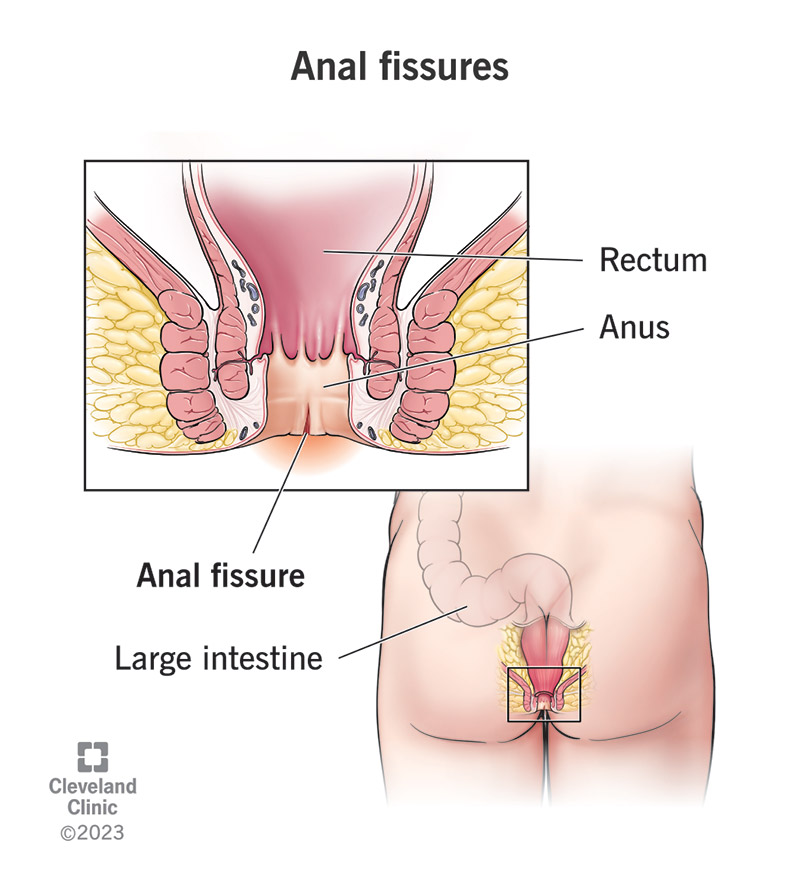
Anal Fissures
Photo: Cleveland Clinic
  1. Constipation: Anal fissures are common among those who suffer from persistent constipation. When you strain, you exert extra pressure on the anal canal, which may cause tiny rips.
  2. Diarrhea: The anal region might get irritated and the skin can become more prone to cracks if diarrhea occurs often.
  3. Trauma: Traumatizing the anal lining, such as when passing big or hard feces, participating in anal intercourse, or using abrasive toilet paper, may cause fissures to form.
  4. Anal Spasms: Anal muscle spasms that don’t let up might make it difficult for the fissure to heal, extending the duration of the ailment.
  5. Inflammatory Bowel Disease (IBD): Chronic inflammation of the digestive system, as seen in Crohn’s disease and ulcerative colitis, may lead to the formation of anal fissures.

Symptoms

Individuals with anal fissures often experience the following symptoms:

  1. Pain during bowel movements: Anal fissures are characterized by a sharp, searing pain or discomfort during defecating.
  2. Bright red blood in stools: Anal tissue tears are a typical cause of puddles of fresh blood on the toilet paper or in the bowl.
  3. Itching and irritation: Due to inflammation, the afflicted region may feel itchy or irritating.
  4. Muscle spasms: Muscle spasms around the anus, especially if they occur involuntarily, may be quite painful.

Treatment Options

The goals of treating anal fissures are to facilitate healing, reduce discomfort, and stop the injury from happening again. The severity and length of the fissure will determine which of many treatments is most appropriate.

  1. Self-Care Measures:
    • Taking care of one’s anal hygiene by washing with lukewarm water or fragrance-free wipes on a regular basis.
    • Adding more fiber to your diet will help you have easier bowel movements by making your stools softer.
    • Staying hydrated to prevent constipation.
  2. Topical Medications:
    • Hydrocortisone-containing ointments and lotions are available over the counter to alleviate pain and inflammation.
  3. Nitroglycerin Ointment:
    • The anal sphincter muscle may be relaxed with the use of nitroglycerin ointment, which is available with a doctor’s prescription.
  4. Calcium Channel Blockers:
    • These drugs may lessen the strain on the anal sphincter and increase circulation to speed recovery.
  5. Botox Injections:
    • Botox injections may be used to treat severe instances of anal sphincter spasms by relaxing the muscle and allowing it to recover.
  6. Surgical Interventions:
    • Surgical treatments such as lateral internal sphincterotomy and advancement flap surgery may be explored for fissures that are persistent or are not healing.

When to Seek Medical Assistance

Most anal fissures will heal on their own, however, there are a few cases when you should see a doctor:

  • Chronic or severe pain that isn’t helped by over-the-counter pain relievers.
  • Large volumes of blood in the feces or other signs of excessive bleeding.
  • Self-care attempts not relieving symptoms after more than two weeks.
  • Infection symptoms, such as high body temperature, increased edema, or pus drainage from the fissure site.


You Might Also Like

Best Ways to Understand Causes of Your Lower Back Pain
Nummular Eczema Diet Guide: Foods That Reduce Inflammation and Irritation
The Cost of Dental Implants: A Comprehensive Guide
Gluten-Free Beer: Health Benefits, Types, and Food Pairings
Anemia: Symptoms, Causes, Diagnosis, and Treatment
SOURCES:American Society of Colon and Rectal SurgeonsNational Institute for Health and Care Excellence (NICE)
Share This Article
Facebook Twitter Copy Link Print
ByEdward Cooper
Dr. Edward Cooper (MD) is an experienced family doctor who treats all ages. He's been in this industry for years. They have more training than general medical practitioners, so they can give you the best care from routine checks to difficult diagnoses and treatments.
- Advertisement -

Related Stories

Uncover the stories that related to the post!
How Does a Painkiller Know Where the Pain is
ArticlesUncategorized

How Does a Painkiller Know Where the Pain is?

Edward Cooper
Edward Cooper
February 19, 2024
Can the Ice Water Face Dip Technique Really Make You Look Younger?
Articles

Can the Ice Water Face Dip Technique Really Make You Look Younger?

Michael E. Eidelman,MD
March 10, 2024
Banana Peeling Monkey Style
Articles

The Science Behind Monkey-Style Banana Peeling

Manoj Prasad
Manoj Prasad
April 13, 2023
Lower Right Abdominal Pain
Articles

Lower Right Abdominal Pain: Causes, Diagnosed & Treatments

Dr. John Smith
Dr. John Smith
January 30, 2023
Cupping Therapy
Articles

From Athletes to A-Listers: Why Cupping Therapy Is the Hottest Trend in Holistic Wellness

Dr. John Smith
Dr. John Smith
June 4, 2023
Why Does our Body Need Potassium
Articles

Why Does our Body Need Potassium?

Samantha Brown
Samantha Brown
April 13, 2024
Skin-Darkening
DermatologistsArticles

Understanding the Science Behind Skin Darkening During Puberty

Michael E. Eidelman,MD
April 12, 2024
What will Happen If you Walk 3 Miles Daily
ArticlesExercise & Fitness

What will Happen If you Walk 3 Miles Daily

Mike Thompson
Mike Thompson
March 5, 2024
Show More
Follow US
Copyright © 2026 Bestratedhealth.com
  • About Us
  • Team
  • Contact Us
  • Privacy Policy
Welcome Back!

Sign in to your account