




Eggs have been known for a long time to be very healthy because they contain many important vitamins, minerals, and high-quality protein.
But the amount people eat has changed a lot over the years because dietary rules and ideas about how cholesterol affects health have changed. A new study in Nutrients looks at egg consumption patterns, trends, and predictors over an amazing 48-year period.
This study is helpful because it shows how eating habits change over time and how important it is to teach people about the health benefits of eggs again.
How Egg Consumption Has Changed Over Time
Over the past few decades, eggs’ cholesterol level has been closely studied, which led to dietary guidelines that limited their intake. In 1968, the American Heart Association (AHA) said that people should eat no more than three whole eggs a week and no more than 300 mg of cholesterol per day.
In 2001, this rule was made even stricter for people with a high risk of heart disease, lowering the daily limit to 200 mg.
These suggestions had a big effect on how people thought about eggs, which led to fewer people eating them. New study, on the other hand, disagrees with these rules and shows that dietary cholesterol doesn’t have much of an effect on serum cholesterol levels for most people.
As a result, the 2015–2020 Dietary Guidelines for Americans got rid of specific cholesterol diet limits. This made it possible for people to eat eggs again.
Even though things have changed, some people still hold outdated views about eggs that make it hard for them to be a part of some diets.
Study Overview: 48 Years of Egg Consumption Trends
A large study was done with 6,326 people from the Rancho Bernardo Study, which is a long-term community-based group in Southern California.
The first time egg intake was measured was from 1972 to 1974. After that, records were gathered again in 1988–1991, 1992–1996, and 2021.
Participants said how many eggs they ate, and in 2021, they were also asked what stopped them from eating more eggs.
Key Findings on Egg Intake Over Time
The study revealed distinct shifts in egg consumption:
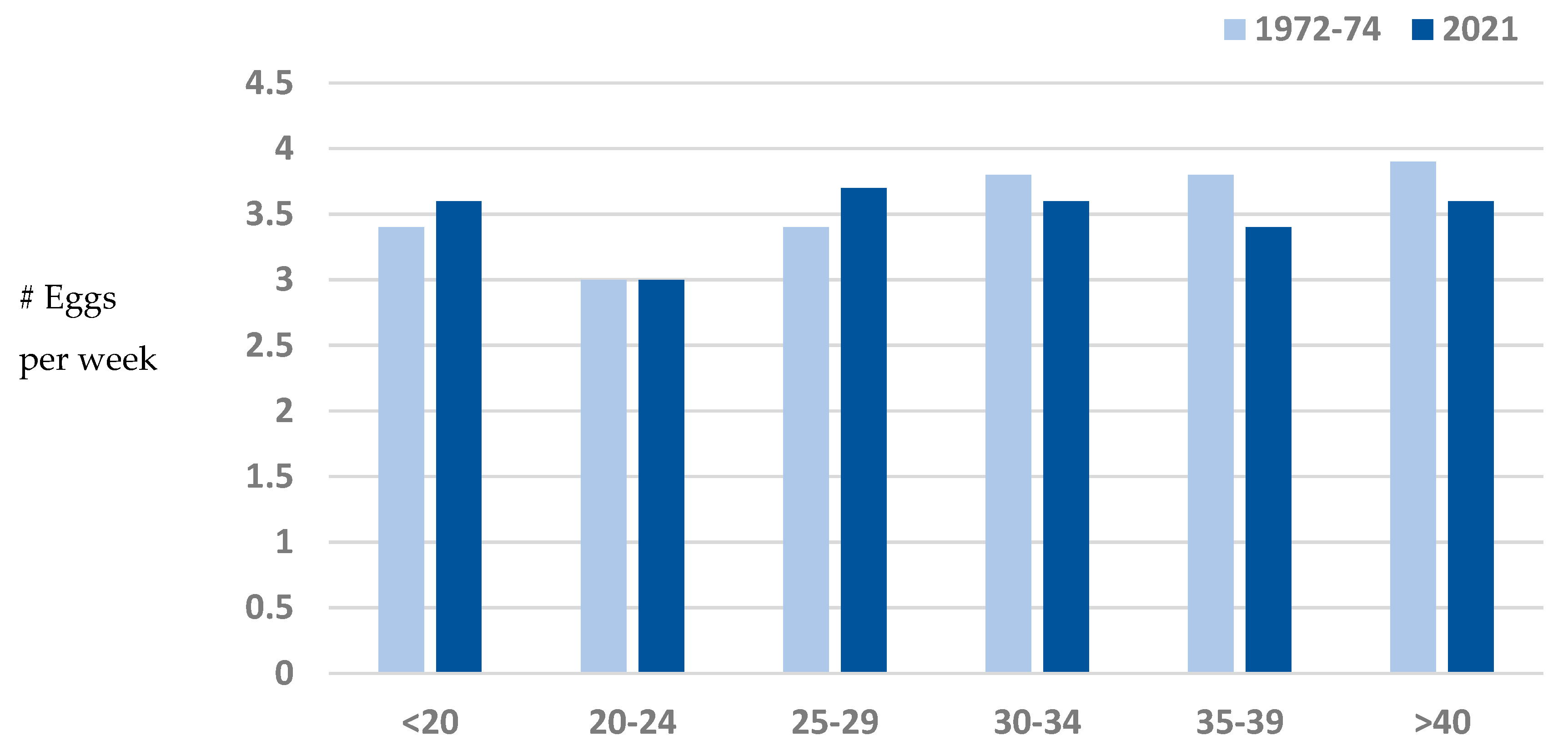
- 1972–1974: The average number of eggs consumed per week was 3.6 ± 3.0.
- 1988–1991: Consumption dropped significantly to 1.8 ± 2.1 eggs per week.
- 1992–1996: Intake remained low at 1.8 ± 2.2 eggs per week.
- 2021: Egg consumption rebounded to 3.4 ± 3.5 eggs per week, aligning with levels from the 1970s.
These data show that there is a clear link between eating eggs and following dietary guidelines. When strict guidelines were issued, consumption went down, but it went back up after the rules were changed.
Patterns of Consumption Across Age and Gender
The study also explored demographic patterns:
- At every point in time, guys always ate more eggs than women. Men laid an average of 4.1 eggs per week in 2021, while women laid an average of 3.0 eggs per week.
- Egg consumption stayed the same across all age groups, which shows that eating habits formed as a child often last into adulthood.
- Younger individuals (ages 20–24 in 1972–1974) ate a little less egg, and this trend continued in 2021.
Predictors of Egg Intake
The study analyzed various factors influencing egg consumption:
- Gender: Women consistently reported lower egg intake than men.
- High Cholesterol & Medication Use:
- In 1972–1974, individuals with high cholesterol or those taking cholesterol-lowering medication ate fewer eggs.
- By 2021, these factors no longer significantly influenced consumption, suggesting increased awareness of the minimal impact of dietary cholesterol on heart health.
- Diabetes:
- In 1972–1974, individuals with diabetes or those using antidiabetic medications reported higher egg intake.
- By 2021, this association had weakened.
These findings suggest that while medical recommendations influenced behavior in earlier decades, changing nutritional knowledge has reduced their impact.
Persistent Barriers to Egg Consumption
Despite the shift in dietary guidelines, 22.1% of participants in 2021 reported limiting their egg intake. The main reasons cited were:
- Perceived Health Risks: 21% believed reducing egg consumption was beneficial for their health.
- Cholesterol Concerns: 10.2% limited eggs due to their cholesterol content.
- Doctor’s Advice: 25.5% restricted egg intake due to medical recommendations, often related to cholesterol.
- Personal Preferences: 6.4% disliked the taste, and 1.3% had egg allergies.
These findings indicate that misconceptions about dietary cholesterol persist, influencing eating habits even after scientific consensus has shifted.
Implications for Nutrition Education
The study shows that people need to learn more about how healthy eggs are. There is a lot of proof that the link between cholesterol and heart disease is not true, but many people still avoid eggs when they don’t need to.
If these false beliefs about eggs are cleared up, more people might be able to enjoy their high-quality protein, vitamins (like B12 and D), and important nutrients (like choline and lutein).
Key Takeaways for Health Professionals
- Doctors and chefs should stress that for most people, the cholesterol they eat doesn’t have much of an effect on their blood cholesterol levels.
- Eggs can be a healthy part of a balanced diet, especially for older people who need high-quality protein to keep their muscles strong.
- Myths that people still believe about eggs and cholesterol should be busted through targeted education, especially among older people.
Conclusion
Looking at egg consumption trends over 48 years is an interesting way to see how eating habits change when dietary rules change.
Egg consumption dropped a lot after tight guidelines were put in place, but it went back up after cholesterol limits were lifted in 2015.
But old ideas still exist, and they cause a big part of the population to limit eggs when they don’t need to.To fully gain from the health benefits of eggs, people need to keep learning about them and get the word out.
Health workers can help people make better food choices by busting myths and promoting advice based on evidence. This will help eggs stay an important and easy-to-find part of a healthy diet.