




If you’re looking for a simple after-dinner drink that won’t add unnecessary sugar or carbohydrates to your evening, unsweetened decaf green tea is a smart option to consider.
Unlike soda, sweet tea, fruit drinks, or dessert-style coffees, plain decaf green tea contains no added sugar and provides naturally occurring plant compounds called polyphenols.
But can decaf green tea actually improve blood sugar? The answer requires some nuance.
Research on green tea and glucose control is promising, but results aren’t completely consistent, and most studies have examined green tea generally rather than specifically decaffeinated green tea.
So, decaf green tea shouldn’t be considered a treatment for diabetes. Instead, its biggest advantage may be that it provides a flavorful, virtually sugar-free alternative to sweetened beverages.
Quick Answer: Is Decaf Green Tea Good After Dinner?
Unsweetened decaf green tea can be an excellent after-dinner beverage for people watching their blood sugar.
It contains no added sugar, is naturally very low in calories and carbohydrates, and provides green tea polyphenols.
Research examining green tea consumption has found some potential benefits for fasting blood glucose, although the evidence for longer-term measures such as HbA1c remains mixed.
For the most blood-sugar-conscious choice, drink it plain or add lemon or fresh mint instead of sugar, honey, syrup, or sweetened creamer.
Why Decaf Green Tea Is a Smart After-Dinner Choice
The beverage you choose after dinner can become an overlooked source of sugar. Sweet tea, regular soda, fruit drinks, sweetened coffee, and other sugary beverages can contribute substantial amounts of carbohydrates.
The American Diabetes Association recommends choosing water and other unsweetened beverages when managing diabetes and specifically lists unsweetened tea as an option.
That’s where decaf green tea can fit into an evening routine.
A cup of plain, unsweetened decaf green tea doesn’t require added sugar to be enjoyable. It also provides the characteristic plant compounds found in green tea.
Green, black, white, and oolong teas all originate from the Camellia sinensis plant, although they are processed differently.
Green tea contains polyphenols and other naturally occurring compounds that have been studied for potential health effects.
The important distinction is that the beverage itself isn’t a magic blood-sugar remedy. Its practical benefit comes partly from what it replaces.
If a person normally drinks a sugary beverage after dinner and switches to unsweetened decaf green tea, that substitution can eliminate a source of added sugar and carbohydrates from the diet.
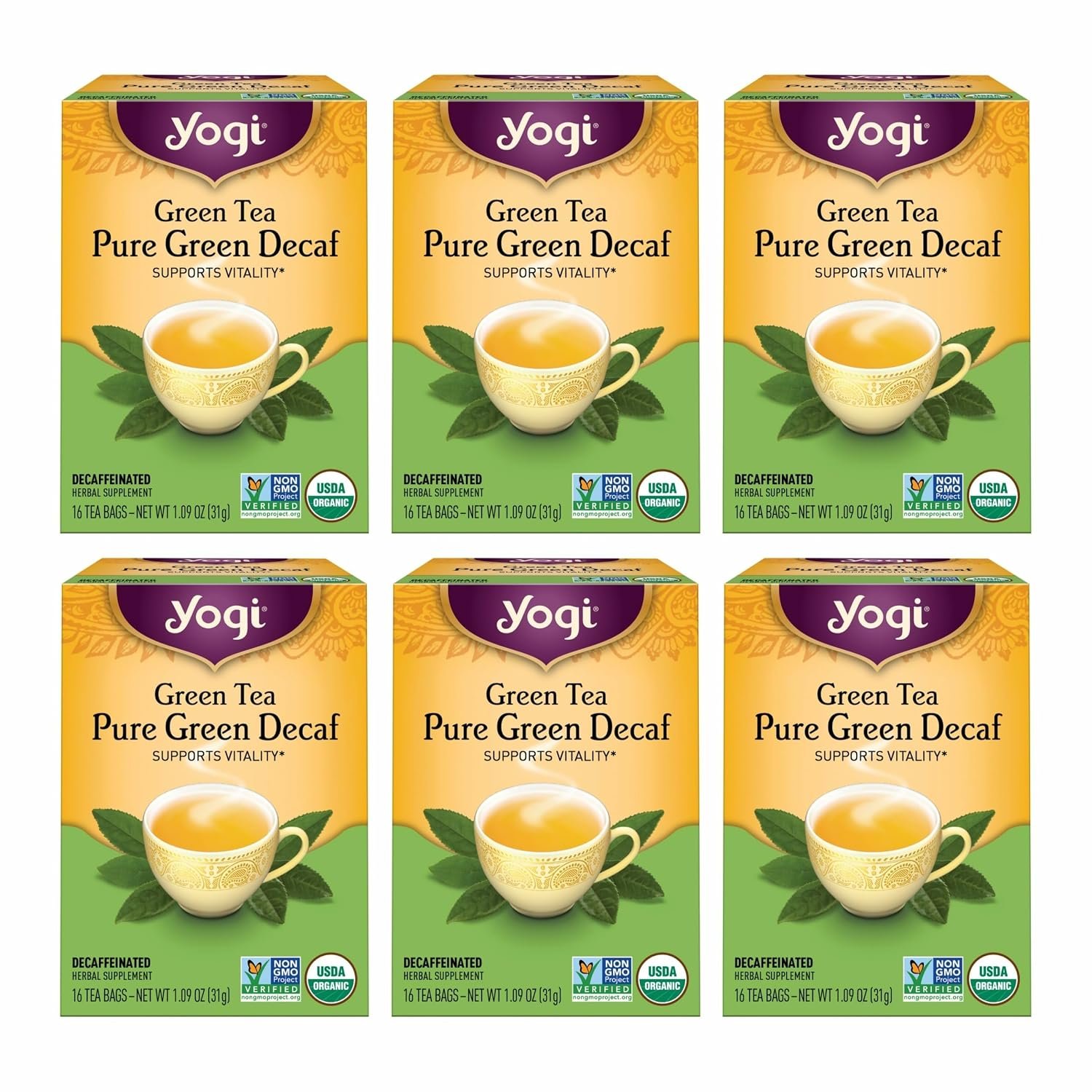
Yogi Green Tea Pure Green Decaf, 16 Tea Bags
How Green Tea May Affect Blood Sugar
Researchers have investigated whether green tea compounds, particularly catechins such as EGCG, may influence glucose metabolism and insulin-related processes.
A 2020 systematic review and meta-analysis evaluated 27 randomized controlled trials involving 2,194 participants.
Researchers found that green tea consumption was associated with a small reduction in fasting blood glucose.
However, it did not significantly improve fasting insulin or HbA1c in that analysis. The researchers also noted that longer-term studies were needed.
A newer meta-analysis published in 2024 reached more favorable conclusions among people with type 2 diabetes, reporting improvements in fasting blood glucose, HbA1c, and insulin resistance.
However, the studies differed considerably, including in their interventions and outcomes, so these findings should not be interpreted as proof that drinking a cup of decaf green tea will lower someone’s blood sugar.
There’s another important limitation: some clinical research has specifically examined green tea extracts or supplements rather than ordinary brewed tea.
Evidence involving decaffeinated green tea is therefore not strong enough to claim that decaf tea independently lowers blood glucose.
The most responsible takeaway is simple: decaf green tea may be a useful part of a blood-sugar-conscious eating pattern, but it isn’t a substitute for diabetes treatment or a balanced diet.
Decaf Green Tea vs. Regular Green Tea
So why choose decaf? The main reason is caffeine.
Regular green tea naturally contains caffeine. The FDA notes that the caffeine content of green tea can vary, and that decaffeinated tea still contains some caffeine rather than being completely caffeine-free.
For people who enjoy green tea after dinner but are sensitive to caffeine, a decaffeinated variety may be more practical.
Reducing evening caffeine can also be useful for people who notice that caffeinated drinks interfere with their sleep.
However, don’t assume every product labeled “decaf” is caffeine-free. Check the manufacturer’s nutrition or product information if caffeine intake is important to you.
For blood sugar specifically, there’s no strong basis for claiming that decaf green tea is superior to regular green tea.
The primary advantage of the decaf version is its lower caffeine content, while the choice between the two can depend on individual tolerance and preference.
Potential Benefits of Decaf Green Tea
Choosing unsweetened decaf green tea after dinner can offer several potential advantages.
It avoids added sugar. Plain tea doesn’t require sugar, honey, or syrup, making it a convenient alternative to sweetened beverages.
It provides green tea polyphenols. Green tea contains naturally occurring polyphenols, which are among the compounds researchers have investigated for potential health effects.
It can replace sugary drinks. This may be particularly important for people trying to reduce their overall carbohydrate and added-sugar intake. The ADA recommends limiting sugar-sweetened beverages and choosing options such as water and unsweetened tea.
It can be an evening-friendly choice. Because decaf tea contains substantially less caffeine than regular tea, it may be a better fit for people who are sensitive to caffeine later in the day. Remember, however, that decaf doesn’t mean caffeine-free.
How to Make Decaf Green Tea After Dinner
Making a blood-sugar-conscious cup of tea doesn’t need to be complicated.
Try this simple preparation:
- 1 decaf green tea bag
- 8 to 10 ounces of hot water
- Steep according to the package directions, usually for a few minutes
- Add fresh lemon or mint if desired
- Enjoy without added sugar
If you’re new to unsweetened green tea, start with a shorter brewing time to produce a milder flavor.
The key is what you don’t add. Sugar, honey, flavored syrups, sweetened condensed milk, and sugary creamers can turn an otherwise low-carbohydrate beverage into a significantly sweeter drink.
What About Adding Lemon?
Adding lemon can be a simple way to make green tea more appealing without adding significant amounts of sugar.
A small squeeze of fresh lemon can provide flavor without turning the beverage into a sugary drink.
Fresh mint, cinnamon, or a small amount of unsweetened ginger can also be used to change the flavor.
However, don’t assume that adding lemon transforms green tea into a powerful blood-sugar-lowering beverage. Its primary role is flavor.
When Is the Best Time to Drink It?
There isn’t strong evidence establishing one specific time when decaf green tea must be consumed to improve blood sugar.
If you enjoy it after dinner, drinking it as part of your normal evening routine is reasonable. The bigger consideration is the overall dietary pattern surrounding the drink.
For example, replacing a sugary dessert beverage with plain decaf green tea is potentially more meaningful than simply adding tea to an otherwise high-sugar diet.
Your dinner itself, portion sizes, carbohydrate intake, physical activity, medications, and individual metabolism all influence blood glucose.
Other Blood-Sugar-Friendly Drinks
Decaf green tea isn’t the only option.
Other choices can include:
| Drink | Added Sugar | Evening Option |
|---|---|---|
| Water | 0 g | Excellent |
| Unsweetened decaf green tea | 0 g | Excellent |
| Unsweetened herbal tea | 0 g | Excellent |
| Sparkling water, unsweetened | 0 g | Good |
| Sweetened iced tea | Often high | Limit |
| Regular soda | High | Limit |
| Fruit juice | Contains natural sugars | Portion matters |
| Sweetened coffee drinks | Often high | Limit |
The American Diabetes Association emphasizes water and unsweetened beverages as healthier choices for people managing diabetes.
Who Should Be Cautious?
Most people can enjoy green tea as a beverage, but individual circumstances matter.
People who are particularly sensitive to caffeine should remember that decaffeinated tea can still contain some caffeine.
The FDA also notes that caffeine sensitivity varies between individuals and can be affected by certain medications and medical conditions.
It’s also important to distinguish brewed green tea from concentrated green tea extracts. Research and safety considerations can differ substantially between an ordinary cup of tea and concentrated supplements.
The National Center for Complementary and Integrative Health notes that liver problems have been reported in a small number of people taking concentrated green tea extracts.
If you take medications for diabetes or another medical condition, don’t change your treatment based on tea consumption.
Discuss significant dietary or supplement changes with your healthcare professional.
Frequently Asked Questions
Can I drink decaf green tea after dinner?
Yes. Unsweetened decaf green tea can be a practical after-dinner beverage because it doesn’t add the sugar found in many sweetened drinks.
It may also be preferable to regular green tea for people who want to reduce their evening caffeine intake.
Does decaf green tea raise blood sugar?
Plain, unsweetened decaf green tea contains no added sugar and is very low in carbohydrates, so it isn’t expected to produce the type of blood glucose rise associated with sugar-sweetened beverages. Individual responses can vary.
Is decaf green tea good for people with diabetes?
It can fit into a healthy diabetes-friendly eating pattern. Research on green tea and glycemic control is promising but mixed, and evidence specifically proving that decaf green tea lowers blood sugar is limited. It should not replace prescribed diabetes treatment.
Can I add lemon to decaf green tea?
Yes. Fresh lemon can add flavor without requiring sugar or syrup. It’s a simple way to make unsweetened tea more enjoyable.
Does decaf green tea contain caffeine?
Yes, potentially. Decaffeination removes much of the caffeine but doesn’t necessarily eliminate all of it. The exact amount varies by product and preparation.
Is green tea better than coffee for blood sugar?
There’s no simple answer. Both beverages can fit into a healthy diet depending on how they’re prepared. For an after-dinner drink, unsweetened decaf green tea may be preferable for people who want a lower-caffeine option.
The Bottom Line
If you’re searching for a better after-dinner drink for blood sugar, unsweetened decaf green tea is a sensible choice.
Its biggest practical advantage is that it provides a flavorful beverage without the added sugar and carbohydrates found in many popular evening drinks.
Green tea also contains polyphenols and catechins that have been studied for their potential effects on glucose metabolism.
Some research suggests green tea may modestly improve certain blood glucose measures, while other studies have found limited or inconsistent effects.
So, think of decaf green tea as a supportive beverage choice—not a diabetes treatment.
For the simplest approach, brew a cup after dinner, enjoy it unsweetened, and add lemon or fresh mint if you want more flavor.
Most importantly, consider the drink as part of the bigger picture: a balanced eating pattern, regular physical activity, adequate sleep, and appropriate medical care remain far more important for long-term blood sugar management.
Disclaimer: This article is for educational and informational purposes only and does not constitute medical advice. People with diabetes, prediabetes, or other medical conditions should follow their healthcare professional’s recommendations and should not change prescribed medications or treatment based on information about green tea.