




When people think about healthy eating, foods like bananas, oranges, milk, spinach, and almonds often come to mind.
While these foods certainly offer valuable nutrients, several lesser-known superfoods provide even higher concentrations of essential vitamins and minerals.
Understanding these nutritional powerhouses can help you make smarter dietary choices and improve your overall health.
Nutrition plays a vital role in maintaining energy levels, supporting immunity, strengthening bones, and preventing nutrient deficiencies.
Health experts emphasize that a balanced diet rich in vitamins and minerals is essential for long-term well-being.
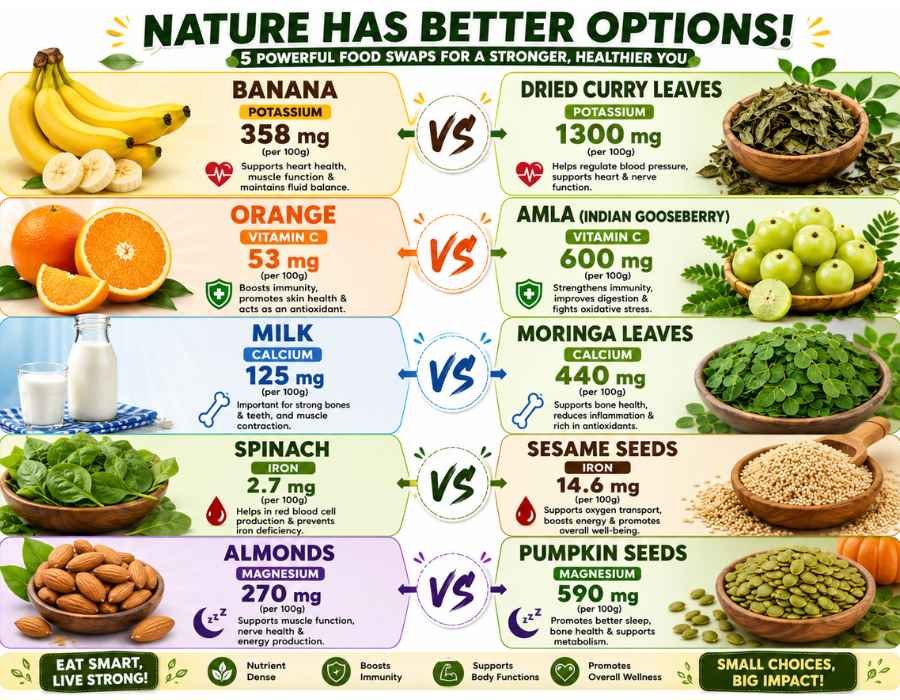
1. Curry Leaves: A Potassium Powerhouse
Bananas are widely known for their potassium content, providing approximately 358 mg per 100 grams.
However, dried curry leaves contain an impressive 1,300 mg of potassium per 100 grams. Potassium is an essential mineral that helps regulate blood pressure, supports heart health, and maintains proper muscle and nerve function.
Including curry leaves in soups, curries, or herbal teas can be an easy way to boost potassium intake.
2. Amla: The Vitamin C Champion
Oranges are often celebrated as a rich source of vitamin C, containing around 53 mg per 100 grams. Surprisingly, amla (Indian gooseberry) contains up to 600 mg of vitamin C per 100 grams.
Vitamin C is crucial for immune support, collagen production, wound healing, and antioxidant protection.
Regular consumption of amla may help strengthen the immune system and protect cells from oxidative stress.
3. Moringa Leaves: More Calcium Than Milk
Milk is traditionally associated with strong bones because it contains about 125 mg of calcium per 100 grams.
Yet moringa leaves provide approximately 440 mg of calcium per 100 grams. Calcium is vital for maintaining healthy bones and teeth, muscle contractions, and proper nerve signaling.
Moringa also contains beneficial antioxidants, making it a highly nutritious addition to smoothies, soups, and vegetable dishes.
4. Sesame Seeds: An Iron-Rich Alternative
Spinach is famous for its iron content, offering around 2.7 mg per 100 grams. In comparison, sesame seeds contain an impressive 14.6 mg of iron per 100 grams.
Iron is essential for producing hemoglobin, which carries oxygen throughout the body. Adequate iron intake helps prevent fatigue and supports healthy cognitive function.
Sprinkling sesame seeds on salads, yogurt, or baked goods is an easy way to increase iron consumption.
5. Pumpkin Seeds: Magnesium Superstars
Almonds are often recommended for their magnesium content, providing approximately 270 mg per 100 grams.
However, pumpkin seeds contain nearly 590 mg of magnesium per 100 grams. Magnesium supports hundreds of biochemical reactions in the body, including energy production, muscle function, nerve signaling, and bone health.
Pumpkin seeds also provide healthy fats, protein, and antioxidants, making them an excellent snack option.
The Takeaway
Popular healthy foods deserve their reputation, but exploring nutrient-dense alternatives can provide even greater nutritional benefits.
Curry leaves, amla, moringa leaves, sesame seeds, and pumpkin seeds are affordable, natural, and packed with essential nutrients.
Rather than relying on a single “superfood,” focus on incorporating a diverse range of nutrient-rich foods into your daily diet.
A varied diet remains one of the most effective ways to support overall health, strengthen immunity, and promote long-term wellness.