


Choosing the right vegetables can make a meaningful difference in a diabetes-friendly eating plan.
Some vegetables are especially low in carbohydrates, while others provide more fiber, vitamins, and beneficial plant compounds that support overall metabolic health.
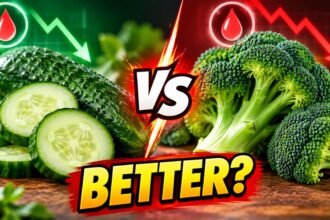
Two popular options worth comparing are cucumber and broccoli. Both are non-starchy vegetables, but their nutritional profiles differ significantly.
Broccoli has a slight advantage over cucumber for overall blood sugar-friendly nutrition because it contains considerably more fiber and beneficial plant compounds.
However, cucumber is lower in carbohydrates and calories, making both vegetables excellent choices for people with diabetes or prediabetes.
So, which vegetable should you eat more often?
Let’s examine their nutritional values, potential effects on blood glucose, and the science behind their health benefits.
Cucumber vs. Broccoli: Nutritional Comparison
Understanding the nutritional differences between cucumber and broccoli is a useful first step in determining which vegetable better fits your dietary goals.
Here is a comparison of their approximate nutritional values per 100 grams of raw vegetables.
| Nutrient | Cucumber with peel | Broccoli |
|---|---|---|
| Calories | 15 | 34 |
| Total carbohydrates | 3.6 g | 6.6 g |
| Dietary fiber | 0.5 g | 2.6 g |
| Protein | 0.7 g | 2.8 g |
| Total fat | 0.1 g | 0.4 g |
| Water | 95.2 g | 89.3 g |
| Vitamin C | 2.8 mg | 89.2 mg |
| Vitamin K | 16.4 mcg | 101.6 mcg |
The comparison reveals several important differences.
Cucumber contains fewer carbohydrates and calories per 100 grams. Its exceptionally high water content also makes it a refreshing, hydrating addition to meals.
Broccoli provides more fiber, protein, vitamin C, and vitamin K. These nutrients contribute to digestive health, normal immune function, and several essential processes in the body.
For people managing diabetes, both vegetables offer advantages.
However, broccoli provides greater nutritional density, while cucumber offers a lower carbohydrate load for the same weight.
Is Broccoli Better Than Cucumber for Blood Sugar?
When comparing cucumber vs. broccoli for blood sugar management, broccoli has a modest nutritional advantage, primarily because of its higher fiber content.
Dietary fiber is important because it supports digestive health and can slow digestion and the absorption of carbohydrates from meals.
This may help moderate post-meal blood glucose responses, especially when fiber-rich foods replace more refined carbohydrate choices.
Broccoli contains approximately 2.6 grams of fiber per 100 grams, compared with around 0.5 grams in cucumber.
Although neither vegetable is particularly high in carbohydrates, broccoli supplies substantially more fiber per serving.
Broccoli also contains sulforaphane, a naturally occurring plant compound that has attracted scientific interest because of its potential effects on glucose metabolism, insulin resistance, and oxidative stress.
However, the research needs careful interpretation. Some studies have investigated broccoli sprout extracts rather than ordinary broccoli florets.
These preparations can contain much higher concentrations of certain bioactive compounds than a typical serving of cooked broccoli.
Therefore, broccoli is a nutritious choice, but eating it should not be considered a proven treatment for diabetes or a guaranteed way to lower blood glucose.
Does Cucumber Raise Blood Sugar?
Cucumber is one of the most convenient low-carbohydrate vegetables for people managing blood sugar.
A 100-gram serving of cucumber with peel contains approximately 3.6 grams of total carbohydrates and very little fiber or naturally occurring sugar.
Because it contains relatively few carbohydrates, cucumber is unlikely to cause a substantial blood glucose increase when eaten in typical portions as part of a balanced meal.
Its high water content also helps add volume to meals without contributing many calories.
Cucumber is particularly useful as:
- A fresh snack between meals.
- An addition to salads and vegetable bowls.
- A crunchy alternative to refined-carbohydrate snacks.
- A side dish alongside protein-rich foods.
- A refreshing ingredient in water without added sugar.
However, cucumber pickles and prepared cucumber salads may have very different nutritional profiles.
Sweetened pickles, sugary dressings, and certain sauces can add carbohydrates or excess sodium.
For a diabetes-friendly choice, fresh cucumber with lemon juice, herbs, or plain yogurt is generally a better option than sweetened preparations.
How Broccoli’s Fiber Supports Blood Sugar Management
One of broccoli’s biggest advantages is its fiber content.
Fiber is a type of carbohydrate that the body does not fully digest.
Unlike rapidly digested carbohydrates, certain types of fiber can slow digestion and influence how quickly glucose enters the bloodstream.
Regularly eating fiber-rich foods is associated with several health benefits, including improved digestive function and better overall dietary quality.
For people with type 2 diabetes, higher-fiber dietary patterns may also contribute to better long-term glucose management.
Broccoli can help increase daily fiber intake while providing relatively few calories.
It also contains vitamin C, vitamin K, folate, and other plant compounds that support normal body functions.
Nevertheless, broccoli is not a substitute for prescribed medication, individualized nutrition therapy, or regular blood glucose monitoring.
What Does Scientific Research Say About Broccoli and Diabetes?
Scientific research has investigated sulforaphane, a compound found in cruciferous vegetables such as broccoli and particularly concentrated in broccoli sprouts.
A 2012 randomized, double-blind clinical trial published in the International Journal of Food Sciences and Nutrition examined broccoli sprout powder in people with type 2 diabetes.
Researchers initially assigned 81 participants to different groups receiving broccoli sprout powder or a placebo for four weeks.
The study reported that the higher-dose broccoli sprout powder group experienced a significant reduction in fasting insulin and the HOMA-IR measure of insulin resistance among the analyzed participants.
More recently, a 2025 randomized, placebo-controlled trial published in Nature Microbiology investigated broccoli sprout extract in people with prediabetes.
The 12-week study found that the effects of the extract on fasting blood glucose varied with participants’ baseline gut microbiota.
The research provides promising evidence about sulforaphane-containing preparations, but it does not establish that eating ordinary broccoli produces the same results.
These findings are scientifically interesting, but they should not be overstated.
More research is needed to determine the long-term effects, appropriate preparations, and clinical relevance of broccoli-derived compounds.
For now, broccoli is best viewed as a nutrient-rich component of a healthy eating pattern rather than a standalone blood sugar treatment.
Cucumber vs. Broccoli: Which Has a Lower Glycemic Impact?
The glycemic index (GI) estimates how quickly carbohydrate-containing foods raise blood glucose under standardized testing conditions.
However, GI alone does not tell the complete story.
Cucumber and broccoli contain relatively small amounts of digestible carbohydrates per typical serving.
Their overall glycemic impact is generally low, especially when eaten alongside protein, healthy fats, and other high-fiber foods.
The glycemic load (GL) also considers the amount of carbohydrate in a serving.
For low-carbohydrate vegetables such as these, the carbohydrate quantity may be more practically informative than focusing on an isolated GI number.
Reliable, standardized GI values are not necessary to establish that both vegetables are suitable choices for most diabetes-friendly meal plans.
Rather than chasing a particular GI ranking, focus on total carbohydrate intake, serving sizes, food combinations, and your own blood glucose response.
Raw vs. Cooked Broccoli: Which Is Better?
Both raw and cooked broccoli can be part of a healthy diabetes-friendly diet.
Raw broccoli retains its natural crunch and avoids nutrient losses associated with cooking. It can be added to salads or eaten with hummus and other nutritious dips.
Lightly steamed broccoli is another excellent option. Steaming softens the vegetable and makes it easier for some people to chew and digest.
Cooking methods can influence the retention of vitamin C and other heat-sensitive compounds.
Boiling broccoli for extended periods may cause more nutrient losses into the cooking water than steaming.
For practical blood sugar management, the difference between raw and lightly steamed broccoli is usually less important than what the vegetable replaces and how it fits into the overall meal.
Avoid preparations that add substantial amounts of sugar, refined carbohydrates, or excessive saturated fat.
Can People With Diabetes Eat Cucumber and Broccoli Every Day?
For most people with diabetes, eating cucumber and broccoli regularly is a sensible dietary choice.
The American Diabetes Association recommends emphasizing non-starchy vegetables as part of healthy eating patterns.
Both cucumber and broccoli are included among its recommended non-starchy vegetable options.
A practical way to incorporate them is to use the Diabetes Plate method:
- Fill half of a nine-inch plate with non-starchy vegetables, such as broccoli, cucumber, leafy greens, or cauliflower.
- Fill one-quarter with lean protein, such as fish, tofu, eggs, or skinless chicken.
- Fill the remaining quarter with quality carbohydrate sources, such as whole grains, beans, or other foods appropriate to your meal plan.
This approach helps balance meals without eliminating carbohydrates completely.
For example, a lunch featuring steamed broccoli, grilled fish, and a moderate portion of brown rice can provide fiber, protein, and carbohydrates in a balanced combination.
Alternatively, cucumber salad with chickpeas, plain yogurt, and herbs can be a refreshing and nutritious meal component.
Individual carbohydrate needs vary. People using insulin or medications that can cause low blood sugar should follow their personalized treatment and meal-planning guidance.
Best Ways to Add Cucumber and Broccoli to a Diabetes-Friendly Diet
Eating healthy does not have to involve complicated recipes or expensive ingredients.
Here are a few easy combinations:
1. Cucumber and hummus
Pair cucumber slices with a moderate portion of hummus for a convenient snack containing fiber, plant protein, and healthy fats.
2. Steamed broccoli with grilled salmon
Combine lightly steamed broccoli with grilled salmon and a portion of whole grains. This provides protein, fiber, and heart-healthy fats.
3. Fresh cucumber and chickpea salad
Mix cucumber, chickpeas, tomatoes, lemon juice, herbs, and olive oil for a satisfying salad. Remember that chickpeas contribute carbohydrates, so consider the total meal.
4. Broccoli and tofu stir-fry
Cook broccoli with tofu, garlic, ginger, and a small amount of vegetable oil. Choose a low-sugar sauce and serve with an appropriate portion of brown rice or another carbohydrate source.
5. Cucumber and plain yogurt
Combine chopped cucumber with unsweetened plain yogurt, mint, and spices for a refreshing side dish that adds protein and nutrients.
These meal combinations can help make nutritious eating more enjoyable and sustainable.
Cucumber vs. Broccoli: Which Is Better for Weight Management?
Both vegetables can support a balanced weight-management plan because they provide relatively few calories per serving.
Cucumber has an advantage in terms of calorie density and water content. It adds considerable volume to meals while contributing very little energy.
Broccoli offers more fiber and protein, which may help increase meal satisfaction.
However, neither vegetable independently causes weight loss or guarantees improved blood sugar control.
Weight management depends on several factors, including overall calorie intake, dietary quality, physical activity, sleep, medications, and individual health circumstances.
Including a variety of non-starchy vegetables can help create satisfying meals while supporting long-term dietary habits.
Frequently Asked Questions
1. Is cucumber or broccoli better for type 2 diabetes?
Broccoli has a nutritional advantage because it contains more dietary fiber and beneficial plant compounds. Cucumber contains fewer carbohydrates and calories. Both are appropriate options for most people with type 2 diabetes.
2. Does cucumber cause blood sugar spikes?
Cucumber is unlikely to cause a substantial blood sugar spike when eaten in typical portions because it is low in carbohydrates. However, individual responses can vary, and added sugars in dressings or pickles may change the overall effect.
3. Can eating broccoli lower blood sugar?
Broccoli is a nutritious, fiber-containing vegetable that can support a balanced diet. Some research on concentrated broccoli sprout preparations has shown promising metabolic effects, but ordinary broccoli has not been established as a treatment for lowering blood glucose.
4. Which vegetable has fewer carbohydrates, cucumber or broccoli?
Cucumber has fewer carbohydrates. Per 100 grams, raw cucumber with peel contains approximately 3.6 grams of carbohydrates, compared with approximately 6.6 grams in raw broccoli.
5. Is raw cucumber better than cooked broccoli for diabetes?
Neither is universally better. Raw cucumber is lower in carbohydrates, while broccoli provides more fiber and several important micronutrients. Both can fit into a diabetes-friendly eating pattern.
6. What is the best time to eat cucumber or broccoli for blood sugar?
There is no established best time to eat either vegetable. Including them with lunch, dinner, or snacks can help improve the overall nutritional quality of meals. The total meal composition and individual carbohydrate needs matter more than the exact timing.
Final Verdict: Cucumber vs. Broccoli for Blood Sugar
When comparing cucumber vs. broccoli for blood sugar, broccoli comes out slightly ahead in terms of nutritional value.
Its higher fiber content, vitamin C, vitamin K, and naturally occurring plant compounds make it an especially nutritious choice for people interested in improving their overall diet and supporting metabolic health.
However, cucumber should not be overlooked.
Its exceptionally low calorie and carbohydrate content makes it a convenient option for people looking to manage carbohydrate intake, increase meal volume, and enjoy refreshing snacks.
The best approach is not to choose one vegetable over the other but to include both in a varied, balanced eating pattern.
For people with diabetes or prediabetes, consistent dietary habits, regular physical activity, appropriate medication when prescribed, and personalized medical guidance remain essential for long-term blood sugar management.
Medical Disclaimer
This article is for informational purposes only and does not replace professional medical advice, diagnosis, or treatment. Consult a qualified healthcare professional or registered dietitian for dietary recommendations tailored to your health needs.