
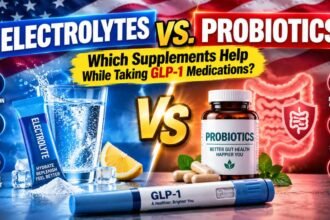



Electrolytes and probiotics can both be useful while taking GLP-1 medications, but they serve very different purposes.
Electrolytes primarily help maintain hydration and mineral balance, while probiotics are designed to support the gut microbiome and digestive health.
The better option depends on your symptoms, fluid and food intake, overall health, and the specific GLP-1 medication you use.
GLP-1 medications, including semaglutide and tirzepatide, can affect appetite and the movement of food through the digestive system.
Some people experience nausea, vomiting, diarrhea, constipation, bloating, or reduced food and fluid intake.
These changes can make hydration and digestive comfort especially important.
How GLP-1 Medications Can Affect Hydration and Digestion
GLP-1 medications can slow gastric emptying and influence appetite. As a result, some people may consume fewer calories and less fluid than they normally would.
Vomiting and diarrhea can also cause the body to lose water and electrolytes. In these situations, maintaining adequate hydration becomes particularly important.
At the same time, changes in gastrointestinal motility may contribute to constipation, bloating, fullness, or other digestive symptoms. This is where probiotics may be considered.
However, electrolytes and probiotics should not be viewed as interchangeable supplements. They address different nutritional and digestive needs.
Electrolytes While Taking GLP-1 Medications
Electrolytes are minerals such as sodium, potassium, and magnesium that help regulate fluid balance and support normal nerve and muscle function.
When someone eats or drinks less than usual, or loses fluids through vomiting or diarrhea, electrolyte intake may become inadequate.
Depending on the circumstances, replacing lost fluids and minerals may help support normal hydration.
Potential benefits include:
- Supporting normal muscle and nerve function
- Helping maintain fluid balance
- Supporting hydration when fluid intake is low
- Helping reduce weakness or muscle cramps associated with inadequate fluid or electrolyte intake
Electrolytes Powder Packets Variety Pack – Sugar Free Hydration Drink Mix

What Is the Best Electrolyte Supplement for GLP-1 Users?
There is no single electrolyte product that is best for everyone taking a GLP-1 medication.
Electrolyte powders and drinks can be convenient when rapid fluid replacement is needed, but some contain considerable amounts of added sugar and calories.
For everyday hydration, a lower-sugar product may be preferable for some people.
Capsules and tablets may provide minerals without additional sugar, although they do not replace the need for adequate fluids.
Your healthcare professional can help determine whether you actually need an electrolyte supplement and which formulation or dosage is appropriate.
People with kidney disease, heart conditions, blood-pressure concerns, or other medical conditions should seek professional advice before regularly increasing electrolyte intake.
Probiotics While Taking GLP-1 Medications
Probiotics are live microorganisms that are intended to support a healthy balance of bacteria in the gastrointestinal tract.
Because GLP-1 medications can alter gastrointestinal movement, some people experience changes such as bloating, gas, constipation, or abdominal discomfort.
Probiotics may support digestive health by influencing the composition and activity of microorganisms in the gut.
Potential benefits may include:
- Supporting a healthy gut microbiome
- Helping maintain digestive function
- Potentially reducing certain types of bloating or gas
- Supporting overall gastrointestinal health
However, research specifically examining probiotics for people taking GLP-1 medications is still developing.
Different probiotic strains can have different effects, so taking a random probiotic does not guarantee symptom relief.
If digestive symptoms persist, discuss the cause with your healthcare professional rather than assuming that probiotics are the solution.
Physician’s CHOICE Probiotics 60 Billion CFU – 10 Strains + Organic Prebiotics – Immune, Digestive & Gut Health

Electrolytes vs. Probiotics: Which One Should You Take?
| Consideration | Electrolytes | Probiotics |
|---|
| Main purpose | Hydration and mineral balance | Gut and digestive health |
| May be relevant for | Vomiting, diarrhea, low fluid intake | Bloating or changes in digestion |
| Primary nutrients/components | Sodium, potassium, magnesium and other minerals | Beneficial live microorganisms |
| Helps replace fluid losses? | Yes, depending on the product | No |
| Supports gut microbiome? | No | Yes |
| Calories | Depends on product | Usually minimal |
| Evidence specifically with GLP-1 medications | Limited and situation-dependent | Still emerging |
| Main consideration | Avoid unnecessary or excessive mineral intake | Choose products carefully and consider the specific strain |
If You Have Vomiting or Diarrhea
When vomiting or diarrhea causes substantial fluid loss, hydration becomes the immediate priority.
An appropriate electrolyte solution may be useful in some circumstances because it can provide both fluids and minerals.
However, severe or persistent vomiting or diarrhea requires medical attention. A supplement should not be used as a substitute for professional evaluation.
If You Have Bloating or Gas
If bloating or gas is your main concern, a probiotic may be something to discuss with your healthcare professional.
Dietary habits, meal size, constipation, and the GLP-1 medication itself can also contribute to gastrointestinal symptoms.
If You Have Constipation
Constipation while taking a GLP-1 medication may require a broader approach.
Adequate fluid intake, appropriate dietary fiber, regular physical activity, and medical guidance may be more important than simply adding a probiotic.
Some forms of magnesium can have a laxative effect, but magnesium should be used carefully, particularly if diarrhea is already present.
What Should You Avoid?
More supplements do not necessarily mean better results.
Be cautious about:
- Choosing high-sugar electrolyte drinks for routine hydration
- Taking large amounts of electrolytes without professional guidance
- Using magnesium when diarrhea is occurring
- Taking multiple supplements that contain the same minerals
- Assuming probiotics will automatically prevent GLP-1 digestive side effects
- Using supplements instead of addressing persistent vomiting, diarrhea, constipation, or abdominal pain
Always check the supplement label and consider your other medications and health conditions before adding a new product.
Do You Need Electrolytes or Probiotics With a GLP-1?
The answer depends largely on why you are considering supplementation.
If your concern is fluid loss from vomiting or diarrhea, electrolytes may be more relevant.
If your concern is digestive discomfort such as bloating or changes in bowel habits, probiotics may be worth discussing.
For many people, however, neither supplement is automatically necessary simply because they take a GLP-1 medication.
A balanced diet, adequate hydration, appropriate physical activity, and following your prescribed medication plan remain foundational.
When Should You Contact a Healthcare Professional?
Contact your healthcare professional if gastrointestinal symptoms are persistent, severe, or interfering with your ability to eat and drink.
Prompt medical attention may be especially important if you cannot keep fluids down, experience significant or ongoing diarrhea or vomiting, develop severe abdominal pain, or notice symptoms of dehydration such as marked weakness, dizziness, or very low urine output.
Your healthcare professional can determine whether symptoms are related to your medication, another health condition, dehydration, or something else.
Frequently Asked Questions
Can you take electrolytes with GLP-1 medications?
Electrolyte supplements can be used by some people taking GLP-1 medications, particularly when fluid or mineral losses are a concern. However, the appropriate product and amount depend on individual health needs. Ask your healthcare professional before using electrolyte supplements regularly.
Should you take probiotics while using a GLP-1?
Probiotics are not automatically required when taking a GLP-1 medication. They may support digestive health for some people, but evidence specifically involving GLP-1 users is still developing. Discuss persistent digestive symptoms and probiotic choices with a healthcare professional.
Do GLP-1 medications cause electrolyte imbalance?
GLP-1 medications do not necessarily cause an electrolyte imbalance directly. However, reduced food and fluid intake or side effects such as vomiting and diarrhea can contribute to fluid and electrolyte losses.
Can probiotics help GLP-1-related bloating?
Probiotics may help some digestive symptoms, but results can vary depending on the individual and probiotic strain. Bloating can have several causes, so persistent symptoms should be evaluated rather than automatically attributed to an imbalance in gut bacteria.
What should you drink when taking a GLP-1?
Water is generally an important source of hydration. If vomiting or diarrhea causes significant fluid loss, an appropriate oral rehydration or electrolyte solution may be useful in certain circumstances. Product ingredients and individual medical needs should be considered.
When should you seek medical advice?
Seek medical advice for persistent or severe vomiting, diarrhea, dehydration symptoms, inability to keep fluids down, or severe abdominal pain. Do not rely on supplements alone when symptoms are significant.
The Bottom Line
Electrolytes and probiotics are not competing supplements, they solve different problems.
Electrolytes primarily support hydration and mineral balance, while probiotics are intended to support the gut microbiome and digestive health.
If a GLP-1 medication is causing reduced fluid intake, vomiting, or diarrhea, electrolyte replacement may be more relevant.
If digestive discomfort is the primary concern, a probiotic may be worth discussing with your healthcare professional.
The most appropriate supplement, and whether you need one at all, depends on your symptoms, diet, hydration status, medications, and overall health.
Before adding a supplement to your routine, speak with a qualified healthcare professional who understands your individual medical history.
Medical review note: This article is for general educational purposes and does not replace individualized medical advice, diagnosis, or treatment. Supplement needs and medication-related side effects can vary considerably between individuals.