


Most of us think of a stroke as something that strikes out of nowhere. One minute everything is normal, the next it’s a life-altering emergency.
While it’s true that strokes can feel sudden and unpredictable, health experts say there is sometimes a warning sign that shouldn’t be ignored and it can appear weeks, or even months, before a major event.
According to the Stroke Association, a stroke happens every 5 minutes in the UK. That statistic alone is sobering.
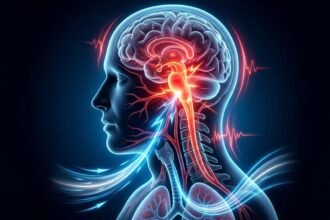
A stroke occurs when the blood supply to part of the brain is cut off, starving brain tissue of oxygen.
With every passing minute, around two million brain cells die. The longer the delay in treatment, the greater the potential damage.
Depending on which area of the brain is affected and how extensive the blockage is, a stroke can change how a person moves, speaks, thinks and even how they feel emotionally.
While no one can completely eliminate their risk, there are well-known steps that lower the chances.
The NHS advises maintaining a balanced diet, exercising regularly, stopping smoking and limiting alcohol intake.
These lifestyle choices play a significant role in protecting blood vessels and overall cardiovascular health.
However, even people who consider themselves relatively healthy can experience a lesser-known event that signals danger ahead.
That event is called a transient ischaemic attack, or TIA. Often referred to as a “mini stroke” or “warning stroke,” a TIA produces symptoms nearly identical to a full stroke but with one crucial difference.
The symptoms are temporary and do not cause permanent neurological damage.
Because they resolve on their own, sometimes within minutes or a few hours, people are tempted to dismiss them. That can be a serious mistake.
Medical specialists explain that a TIA is essentially the body’s alarm bell. It happens when there is a temporary disruption of blood flow to the brain.
A person may notice that their face suddenly droops on one side, they cannot lift both arms and keep them raised, or their speech becomes slurred.
Vision problems, dizziness, confusion, vertigo, difficulty swallowing and balance issues can also occur.
The key feature is the abrupt onset. These symptoms appear suddenly and then fade.
The danger lies in what follows. Experts in vascular neurology warn that a TIA is often a harbinger of a more severe stroke.
Research shows that the risk of a full stroke is significantly elevated within the first 48 hours after a TIA and remains high over the next seven, 30 and even 90 days.
In other words, what seems like a brief and harmless episode may actually be a narrow escape.
Because the symptoms can disappear quickly, many people fail to seek help. Yet urgent medical assessment is critical.
The NHS recommends that anyone experiencing TIA symptoms should be referred to a specialist within 24 hours.
Even if the episode has already passed, it is essential to see a doctor as soon as possible. An evaluation can identify underlying causes, such as narrowed arteries or irregular heart rhythms, and allow treatment to begin promptly.
Medication, lifestyle adjustments and sometimes procedures can dramatically reduce the risk of a full stroke.
Time matters not only during a stroke, but before one as well.
Recognising a TIA for what it is a warning could be the difference between a temporary scare and permanent damage.
Listening to your body and acting quickly might just protect you in the crucial 90 days ahead.